Differentiation in practice - Neelam’s Year 10 supported learning class works at different levels
On this page
Share this
Aorere College
Maths and English
New Zealand
New Zealand
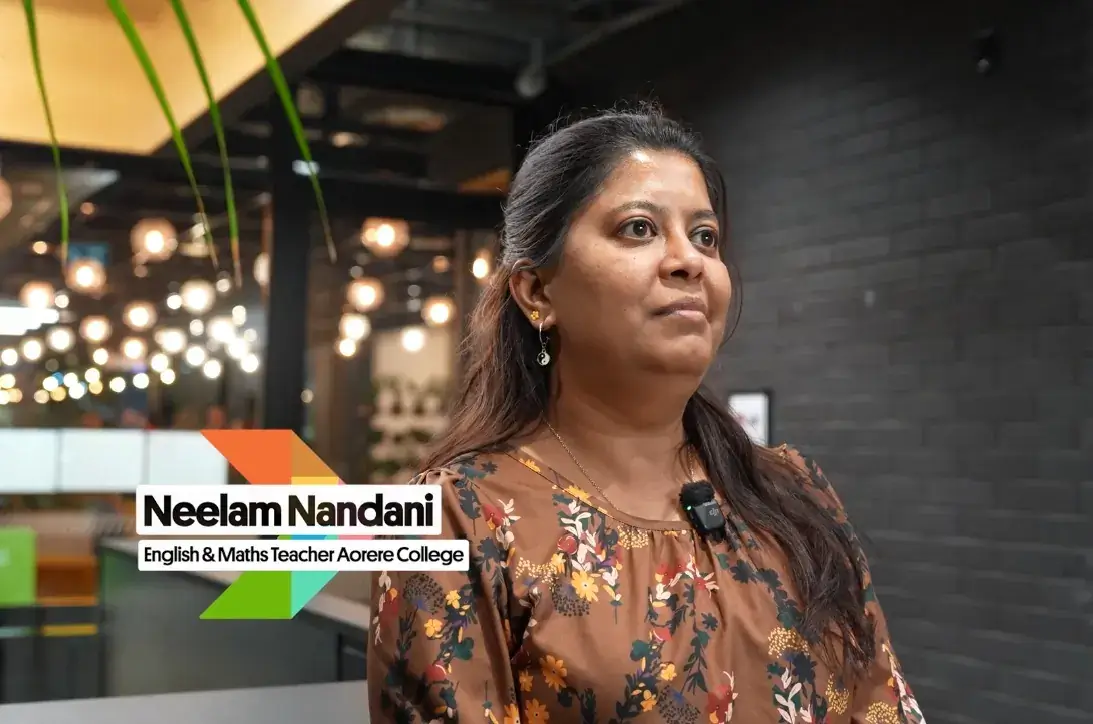
Neelam Nandani teaches English and maths to Years 9 to 12 at Aorere College in Papatoetoe, South Auckland, including a Year 10 supported learning class where students work at different levels.
“It’s just hard to figure out who is going to do what, in different phases all the time. So EP is my go to.”
About Aorere College
Aorere College is a large, co-educational state secondary school in Auckland, New Zealand, welcoming students from Years 9 to 13. Its vision is for students who are strong in their culture and identity, connected to their community, and successful in their aspirations. Its priorities include helping students make progress, achieve and stay engaged in their learning, developing a local, bicultural curriculum, and growing teacher expertise in pedagogy.

Working With Mixed Levels in a Supported Learning Class
Across Years 9 to 12, Neelam teaches about 30 students at each year level. Her Year 10 supported learning class is small, with students at different phases at any one time, and working out who does what is a constant question. EP is where she goes first.
Algebra comes round often, and students tell Neelam it doesn’t click for them. She turned to EP teach it to her supported learners, and found that some patterns began to click with them.
EP is one of the activities Neelam builds into a lesson, and her students have noticed.
“There are two, three activities that I normally do with my kids in order to get their attention, and they’re like, ‘Miss, can we do Education Perfect again?’ And that’s a good thing.”
Setting a 20-Minute Independent Block, Then Reassigning
After a lesson, Neelam allows a 20-minute phase for independent work in EP. The percentage students achieved shows her whether the work is at her target level. Students below it get the task reassigned.
“It was so cool that it actually gives you … a percentage that the kids have got. I could actually reassign.”
She describes the reassign step as self-regulation for her students, as well as reflection. In her telling, their thinking runs from “I can do this” to “No, no, I will definitely learn this.”
While students work, Neelam can focus on other tasks. Her routine is a small version of the school’s wider focus on tracking achievement, setting goals and evaluating progress.
“While I’m looking at other stuff, the kids are getting their own feedback at their own pace, their own time.”

Differentiation in Practice
What Teachers Say About Differentiation
In EP’s 2025 Teacher Efficacy Survey of 863 educators, 91.4% of teachers said that EP provided effective tools to support students with differentiated learning needs.
Neelam’s Year 10 supported learning class shows what that looks like in practice. Differentiation happens at the reassign step: the same task, a second go, for the students who need it.
Why a Short Independent Block, Then a Second Go, Works
Neelam’s routine sits on two parts of the EP Learning Cycle.
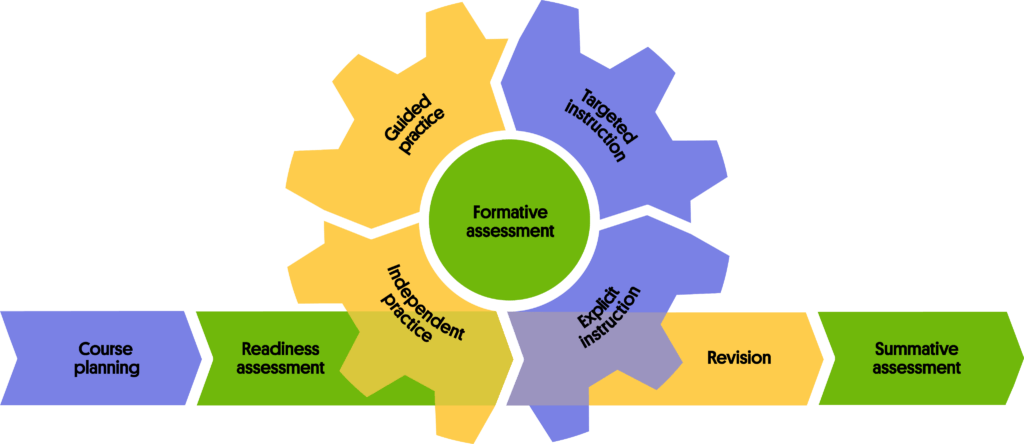
The independent block is independent practice, where students apply what the lesson just taught. The percentage that comes back is formative assessment, the hub of the cycle, because it tells her what to do next while it can still change what happens.
Rosenshine’s review of effective instruction describes why this matters: students need extensive, successful independent practice after guided teaching. Hattie and Timperley describe the feedback that makes practice count as three questions: where am I going, how am I going, and where to next. Neelam described her routine in her own terms, and it lines up with both.
The device has a clear job: a bounded block after a lesson that ends in a result deciding what happens next.
Across Australia and New Zealand, 71% of the 404 educators in EP’s June 2026 Impact Survey said EP improved their ability to differentiate instruction. The figure is self-reported perception.

The decision stays with Neelam. The percentage gives her something to decide with.
What Other Teachers Can Take From It
A teacher with a class spread across several levels could:
- teach the lesson, then set a short independent task in EP, as Neelam does with 20 minutes;
- read each student’s percentage against the level they want;
- reassign the task to students below it.
I recommend Education Perfect as a valuable teaching and learning resource for secondary English. The platform provides interactive activities, quizzes and differentiated learning tasks that can support students in developing their reading, writing, spelling, grammar and vocabulary skills.
One of its key strengths is the ability to differentiate learning to meet the needs of students with varying literacy abilities. Teachers can assign targeted activities to address individual learning gaps, reinforce classroom learning and provide extension opportunities for students who are ready for more challenging work” – Luke Gonnella, Rockingham Senior High School“
Why Neelam Reaches for EP
“The feedback that [EP] gives is so spot on, like, why wouldn’t you?”
For Neelam, EP is a go-to because it is easy for teachers to use. Her students receive their feedback as they work, and they ask to do it again, which she counts as a good thing.
A Complement to the Lesson Plan
Neelam is clear about where EP sits: alongside the lesson plan while the teaching stays with her.
“It’s not like, let’s just not do any lesson plan. It’s a supplement to our lesson plan.”
Sources
- Rosenshine, B. (2012). Principles of instruction: research-based strategies that all teachers should know. American Educator, 36(1), 12–39. https://eric.ed.gov/?id=EJ971753
- Hattie, J., & Timperley, H. (2007). The power of feedback. Review of Educational Research, 77(1), 81–112. https://doi.org/10.3102/003465430298487
- EP Impact Survey, June 2026 (404 educators, 62% Australia, 38% New Zealand).